
 Offers & Savings
 No Insurance? Check out our Savings Plan
Drew Beaty DDS Blog
A Patient-Focused Promise for Your Dental Care
What Should I Know About Invisalign?
March 13, 2024
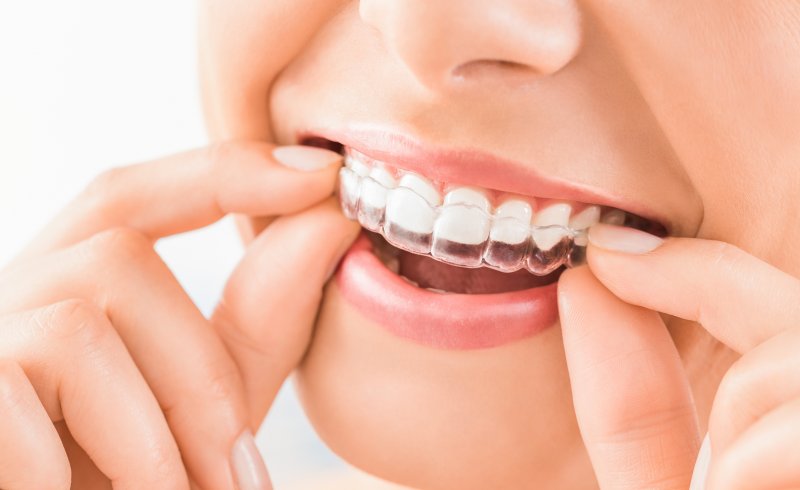
Everybody wants a beautifully aligned set of teeth, but many are hesitant to commit to traditional braces because they involve significant food restrictions and wearing conspicuous metal parts for a year or more. Luckily, Invisalign can realign teeth with removable and virtually invisible clear aligners that allow the patient to eat whatever they want. Here’s a short list of common questions about Invisalign to help you know if this treatment might be right for you.
(more…)The Impact of Invisalign on Your Dating Life
February 9, 2024

Dating can be one of the most nerve-wracking aspects of adulthood, and adding an uncertain factor like Invisalign is tough. However, with the right mindset and a little preparation, your dating life doesn’t need to grind to a halt. You can still turn on the charm while undergoing orthodontic treatment.
If you want to be more confident in your dating life while wearing Invisalign, continue reading.
(more…)What Makes Someone a Good Candidate for Dental Implants?
January 12, 2024
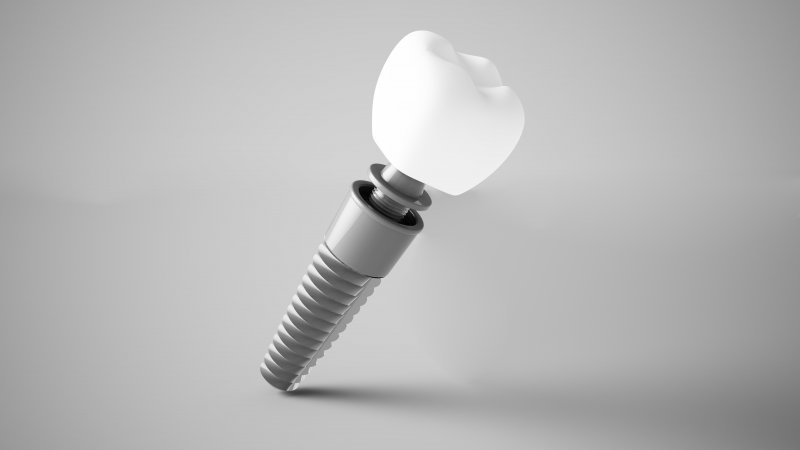
Dental implants have allowed many patients to replace missing teeth with high-quality restorations that look, feel, and work just like the real thing. They are considered the best form of tooth replacement available because they are incredibly lifelike, highly functional, require only the same hygiene as real teeth, and can last a lifetime with excellent care. However, a patient will need to meet certain oral health requirements to get them. Here’s what makes someone a good candidate for dental implants and how you can get to that point if you’re not there yet.
(more…)Beyond the Basics: 5 Hidden Gems About Dental Implants
December 22, 2023
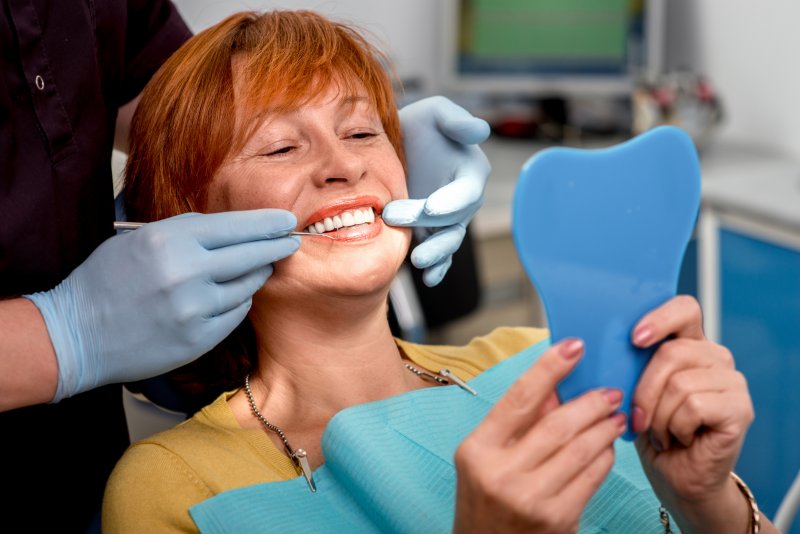
Dental implants have become a popular and effective solution for replacing missing teeth, offering a natural look and feel. They’ve been so successful as a treatment that most dental schools now offer training as part of their regular curriculum. While you may be familiar with the basics, several lesser-known facts about them will blow your mind.
Continue reading to delve into five surprising hidden aspects of dental implants.
(more…)Don’t Let These Three Holiday Libations Lead to Dental Destruction
December 13, 2023

The holiday season is here again to draw friends and family together. Feasting and drinking are appropriate for many celebrations, and the holidays all have their traditional beverages to help get everyone in the spirit of the season. However, a few of these favorite potable treats can be dangerous for your teeth if they aren’t consumed in moderation or if the drinker does not practice proper oral hygiene. Here are a few traditional brews to go easy on during holiday gatherings.
(more…)Savor the Flavor and Spare Your Teeth with These 4 Tooth-Friendly Thanksgiving Hacks
November 22, 2023

It’s the season again to gather around the table with friends, family, and food to share stories and smiles. Thanksgiving is a special time when it seems like every indulgence is on the table. From sugar-laden pies to the expensive wines you’ve been saving for later, delights are the order of the day. If you’re trying to preserve your oral health, it can be especially challenging.
If you want to enjoy the festivities of Thanksgiving while keeping your smile bright and healthy, continue reading.
(more…)Wearing Invisalign During Halloween: 3 Helpful Tips
October 12, 2023

Will you be in the middle of your Invisalign treatment during Halloween? If so, the good news is that your aligners won’t prevent you from indulging in your favorite sweet treats. However, you need to be careful about making the right decisions so that your treatment isn’t disrupted. Below are 3 tips that Invisalign-wearers might find helpful on and after October 31st.
(more…)What are the Dangers of Mail-in Clear Aligners?
September 28, 2023
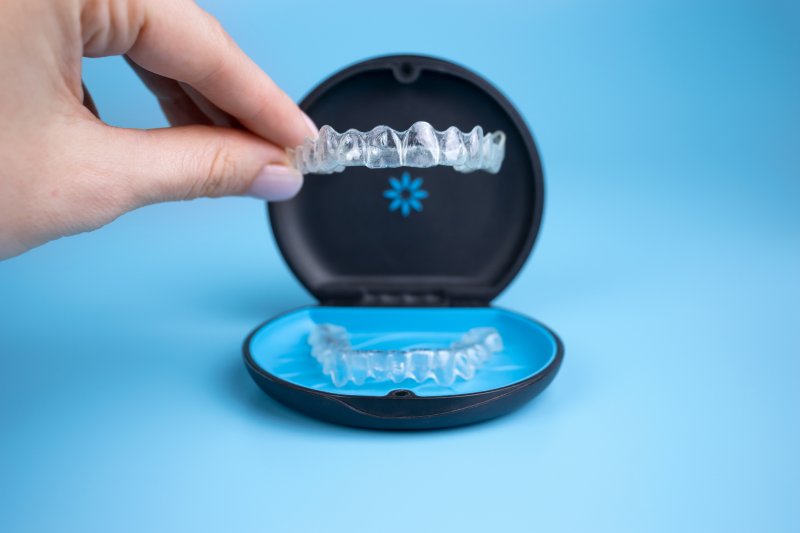
As you likely know, today’s dentists can straighten teeth with clear aligners. The trays rely on micro-movements to bring your pearly whites into position. Still, you may be tempted by a seemingly more convenient option: mail-in clear aligners. These kinds promise effective results without the hassle of regular dental visits. In reality, though, they won’t do you much good – such trays are unsafe. To learn more, here are four major ways that mail-in aligners are dangerous.
(more…)Can I Receive Teeth Whitening with Dental Implants?
August 15, 2023
 Dental implants are a great investment because they are a close replica of real teeth, providing results that look and feel natural. They are made of stain-resistant material, so your smile can stay bright and beautiful for many years. However, any remaining teeth are still vulnerable to discoloration. Teeth whitening can’t turn back the clock, but it can be bad news if you have dental implants, and here’s why.
How to Pick Toothpaste For Your Veneers
July 6, 2023

Once you get a set of new veneers, you’re likely to be pleasantly surprised by how natural your new teeth feel. While it’s hard to doubt that veneers look incredible, some people have trouble believing that they’re going to feel like real teeth.
That said, part of their realism comes from how easy they are to take care of, involving just the brushing that you’re probably already used to. However, there is one large difference, that being the toothpaste you use.
Here’s more information about what kind of toothpaste is best for veneers.
(more…)